How to Finance a Micro-Factory: A Practical Capital Stack for Early-Stage Manufacturers
Learn how to finance a micro-factory with a practical capital stack for early-stage manufacturers and build a viable business without conventional venture

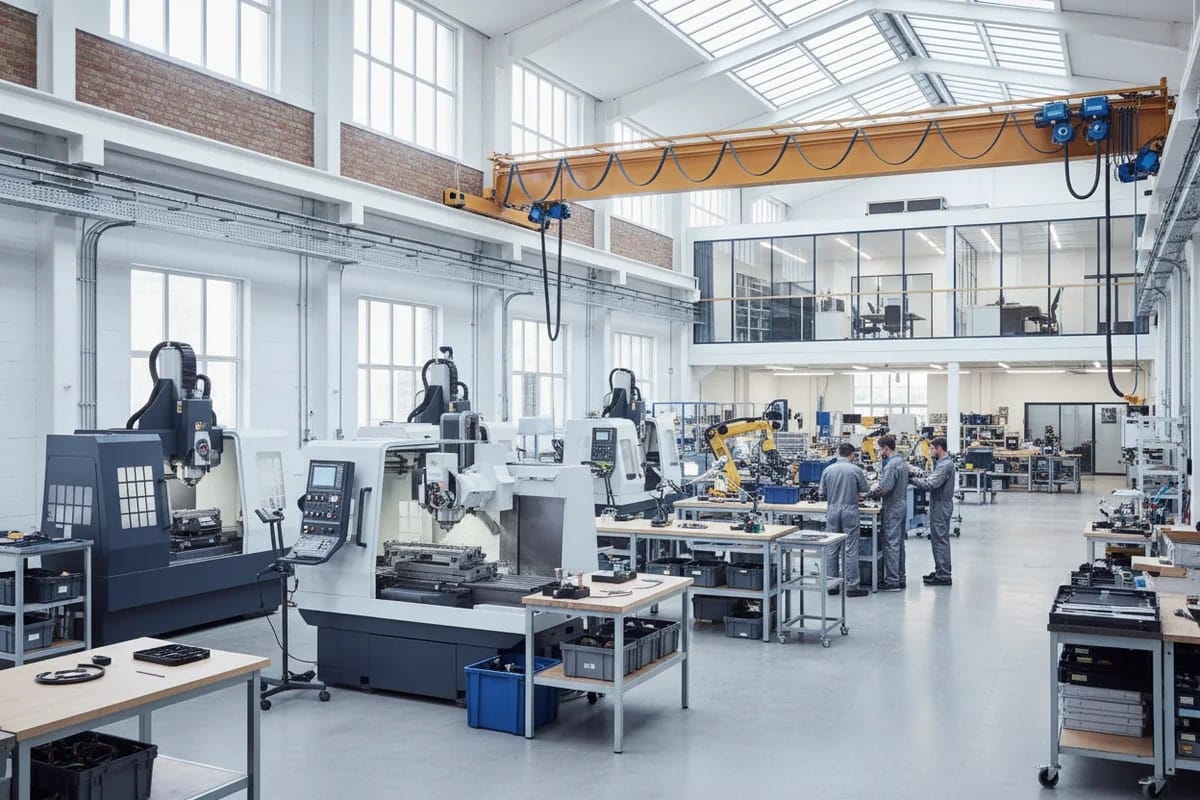
The economics of manufacturing are shifting in ways that genuinely favour smaller operators. Compact, highly automated production facilities are no longer the exclusive domain of well-capitalised industrial incumbents, and founders who understand how to assemble the right combination of financing instruments can build viable manufacturing businesses without raising a conventional venture round or committing to a large-scale factory lease. The challenge is not finding capital so much as understanding which instruments apply at which stage and how they fit together into a coherent structure.
What a Micro-Factory Actually Is
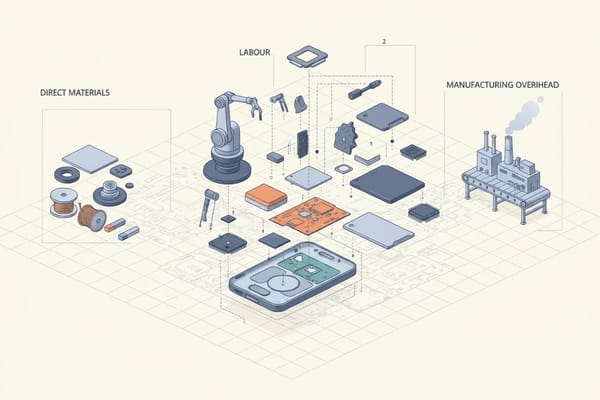
A micro-factory is a compact manufacturing facility that integrates advanced technologies including artificial intelligence, robotics and automated process control to optimise production within a relatively small physical footprint. The World Economic Forum has described micro-factories as a meaningful structural shift in how goods are made, with smaller and more automated facilities increasingly capable of producing outputs that would previously have required far larger operations.
The distinction from a traditional production facility is not simply one of size. A conventional factory is typically designed around high-volume throughput, with extensive fixed infrastructure, large workforces organised around repetitive tasks and capital equipment that is difficult to reconfigure once installed. A micro-factory, by contrast, is designed for flexibility and automation density, meaning that a higher proportion of the production process is handled by machines and software rather than labour, and the facility can often be reconfigured as product lines evolve. This makes micro-factories particularly well suited to founders who are still iterating on their product, operating in markets with shorter production runs or building in locations where industrial labour is expensive.
The financial profile of a micro-factory is also different from a traditional facility. The upfront costs for robotics and AI-integrated equipment can be substantial, and founders should not underestimate what it costs to commission a genuinely automated line. However, the ongoing cost structure tends to be more predictable once the facility is running, and the financing instruments available for capital equipment and facilities are well developed enough that founders can often avoid deploying equity into fixed assets at all.
Equipment Leasing and Vendor Finance
For most early-stage manufacturers, equipment leasing and vendor financing are the most accessible entry points into capital equipment ownership. Both instruments allow a business to acquire machinery without a large upfront payment, preserving working capital for operations, inventory and customer acquisition.
Equipment leasing works by having a finance company purchase the asset and lease it back to the business over a fixed term, typically between 24 and 72 months. At the end of the term the business may have the option to purchase the equipment at a residual value, extend the lease or return the asset. Vendor financing is a related structure in which the equipment manufacturer or distributor arranges financing directly, often through a captive finance arm or a preferred lending partner, as an incentive to close the sale.
Some lenders in this space offer application-only financing up to $500,000, meaning that approval decisions are made on the basis of a credit application rather than full financial statements, with interest rates starting at around 4.5% depending on creditworthiness and asset type. For founders who are pre-revenue or in early production, vendor financing through the equipment supplier is often the most practical first call because the supplier has a commercial interest in making the transaction work and may accept thinner credit profiles than a bank would.
The practical implication for a micro-factory founder is that a significant proportion of the capital equipment budget can be financed through leasing without touching equity, provided the business has some operating history and the assets being financed are standard enough to have a secondary market value.
SBA 504 Loans and International Equivalents
Once a founder is ready to commit to a facility or to finance larger fixed assets, government-backed loan programs become relevant. In the United States the SBA 504 loan program is specifically designed for this purpose, providing long-term fixed-rate financing for major fixed assets including real estate and equipment.
The structure of an SBA 504 loan is worth understanding in detail because it differs from a conventional bank loan. A typical 504 project is financed with 50% from a conventional bank lender in a first lien position, 40% from the SBA 504 loan in a second lien position and 10% from the business owner as equity. This means a founder needs to contribute only 10% of the project cost to access the full asset, which is a materially better loan-to-value ratio than most conventional commercial lending. The maximum SBA 504 loan amount for manufacturers is $5.5 million, which is sufficient to finance a serious micro-factory installation including building improvements and major equipment.
Australian founders have access to comparable programs through the federal government's financing support mechanisms and through state-level economic development bodies, several of which offer concessional loans and co-investment structures for manufacturers establishing or expanding operations. In Canada, the Business Development Bank of Canada provides long-term financing for equipment and facilities with terms and structures broadly similar to the SBA 504 framework, and the Canada Account and various provincial programs add further layers of support for manufacturers in priority sectors.
The key eligibility consideration across all of these programs is that the business must be operating for profit and the assets being financed must be used in the business. Founders should also be aware that SBA 504 loans and their international equivalents are not fast to close, with typical timelines of 60 to 90 days from application to funding, so they are better suited to planned facility investments than to urgent capital needs.
Government Co-Investment Grants
Grants represent the most attractive form of capital for early-stage manufacturers because they do not need to be repaid and do not dilute ownership, but they are also the most competitive and the most administratively demanding to pursue. Most government grant programs for manufacturers operate on a co-investment basis, meaning the grant covers a defined percentage of an eligible project cost and the business must contribute matching funds from its own resources or from other financing.
Match requirements vary by program and jurisdiction but commonly range from 50% to 100% of the grant amount, meaning a $200,000 grant might require the business to demonstrate $200,000 in matched expenditure from non-government sources. In the United States, the Manufacturing Extension Partnership and various Department of Energy and Department of Commerce programs provide grant funding for manufacturers adopting advanced technologies. In Australia, the Modern Manufacturing Initiative and state-based industry development grants have provided co-investment funding for manufacturers in priority sectors. In Canada, the Strategic Innovation Fund and the Industrial Research Assistance Program offer grant support for manufacturers at various stages.
Founders should treat grants as a supplement to a capital structure rather than its foundation, because grant timelines are unpredictable and approval is not guaranteed. The most effective approach is to identify grant programs that are aligned with what the business is already planning to do, apply early and use the grant to reduce the equity contribution required in the overall stack rather than to fund activities that would not otherwise proceed.
Revenue-Based Financing
Revenue-based financing becomes relevant once a micro-factory has begun generating sales. Under this structure a lender advances capital in exchange for a percentage of future monthly revenues until a defined repayment cap is reached, typically between 1.2 and 1.5 times the original advance. The repayment adjusts with revenue, which means the obligation is lighter in slower months and heavier when sales are strong.
For manufacturers this instrument is particularly useful for financing working capital, raw material purchases and production scaling costs that do not fit neatly into asset-backed lending. It does not require the business to give up equity and does not impose a fixed monthly payment that could create cash flow problems during production ramp-up. The cost of capital is higher than secured debt, so founders should use revenue-based financing selectively for short-duration needs rather than as a long-term capital solution.
Assembling the Capital Stack
A practical capital structure for a micro-factory at early stage might look like this: vendor finance or equipment leasing covers the capital equipment, representing perhaps 60 to 70% of the equipment cost with the balance funded by a grant or equity. An SBA 504 loan or equivalent covers the facility, with the business contributing 10% and the bank and government program covering the remaining 90%. Grants reduce the equity required in both buckets where eligible expenditure can be matched. Revenue-based financing covers working capital needs once production has begun and revenue is flowing.
The logic of this sequence is that each instrument is matched to the asset class it is best suited to finance, and the overall equity requirement is minimised without creating a fragile structure that depends on any single source.
Where to Apply and in What Order
Founders should begin with equipment vendors before approaching any other financing source, because vendor finance is the fastest to access and requires the least documentation. Once equipment financing is in place, the next step is to identify the facility financing program most appropriate to the jurisdiction, whether that is the SBA 504 in the United States, the BDC in Canada or a state or federal program in Australia, and to begin the application process early given the 60 to 90 day timelines involved.
Grant applications should run in parallel with facility financing rather than after it, because many programs require the project to not yet have commenced at the time of application. Revenue-based financing should be approached only after the business has at least three to six months of consistent revenue, as lenders in this space will want to see a track record before advancing capital.
The overall principle is to move from the most accessible and asset-specific instruments toward the more complex and discretionary ones, building a capital structure incrementally rather than trying to raise everything at once from a single source.